Introduction to Mridangam
Ancient Musical Tradition
Indian music is among the oldest musical systems in the world, with a tradition spanning several thousand years. It is divided into two primary branches: Hindustani sangeet of North India and Carnatic sangeet of South India. Together, they form a rich and continuous musical heritage rooted in theory, practice, and cultural expression.
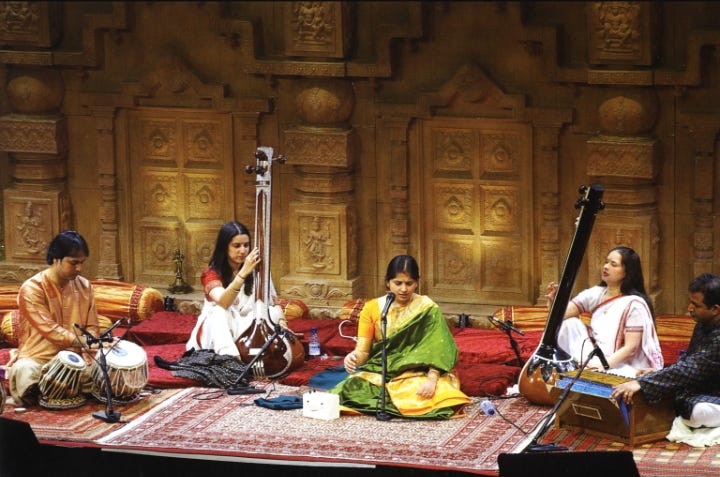
Mridangam in Carnatic Music
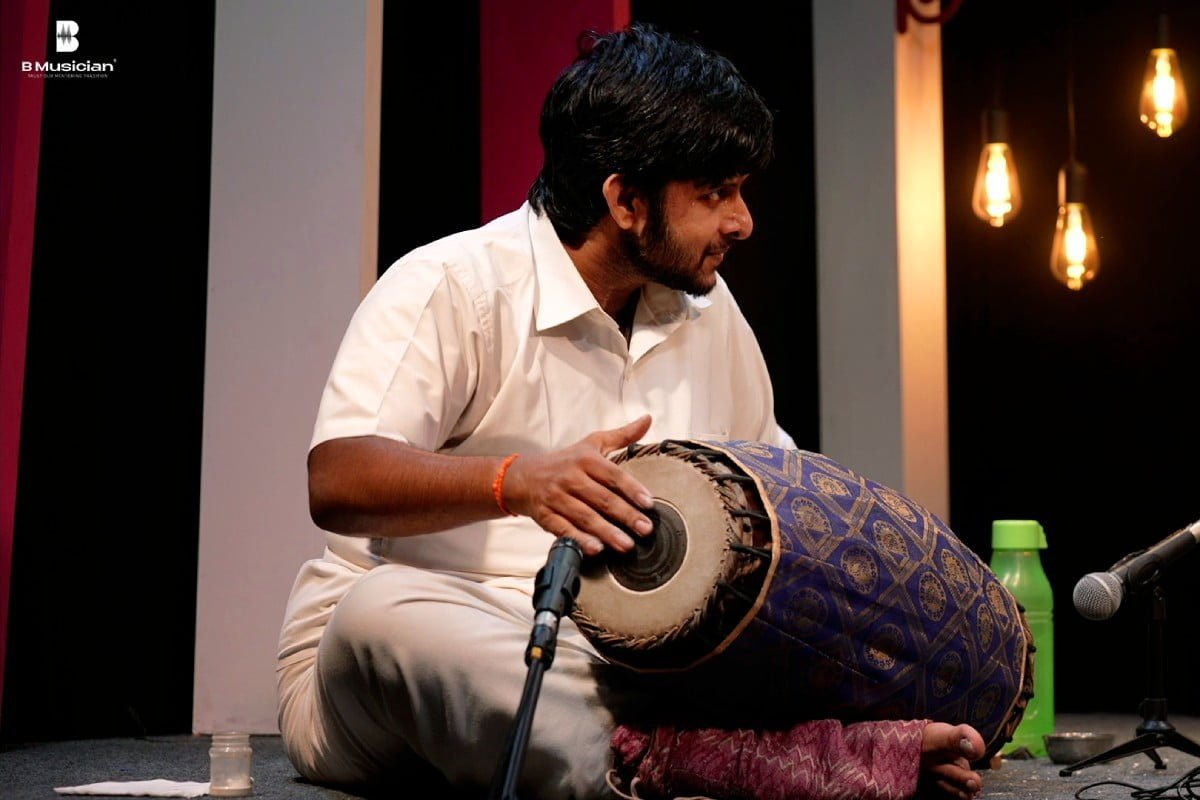
Carnatic music of South India primarily employs the mridangam as its principal percussion instrument. Crafted from a single hollowed block of wood with playing surfaces on both ends, the mridangam represents the South Indian variant of the broader mridang family of drums, which includes instruments such as the maddal, khol, and pakhawaj.
Rhythmic Sophistication
A defining strength of Carnatic music lies in its advanced rhythmic framework, which allows continuous innovation and expansion. Unlike Western percussion, where drums primarily maintain pulse, the mridangam is tuned to pitch and actively accompanies melodic elements, enhancing musical depth and expression through intricate rhythmic patterns.

The King of Percussion
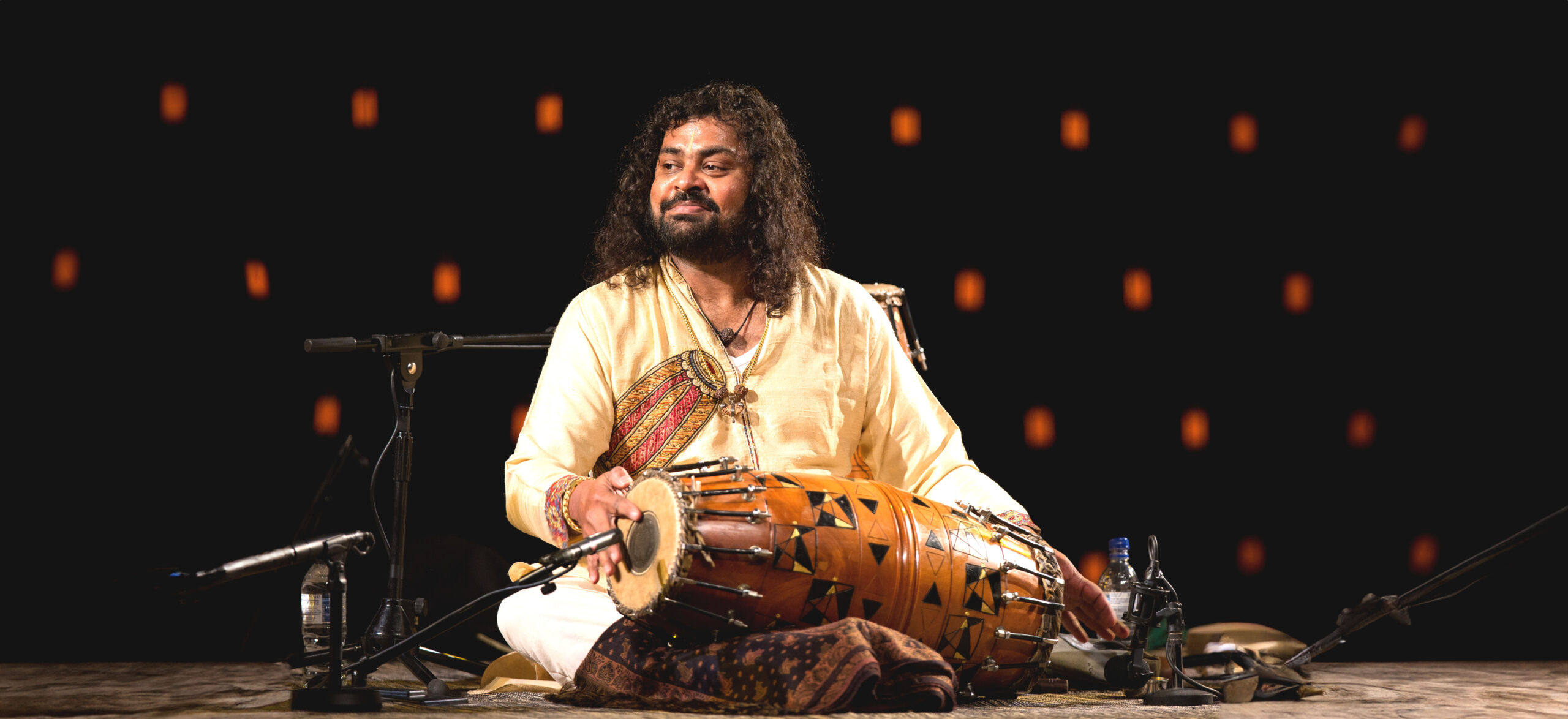
Revered as the monarch of percussion instruments, the mridangam is celebrated for its intellectual and artistic demands. During solo performances, its rhythmic complexity and mathematical precision create an engaging experience appreciated by both scholars and general audiences. Percussionists worldwide acknowledge its unparalleled rhythmic authority.
Percussion in Indian Classical Music
In Indian classical music, percussion forms the structural backbone of performance. This importance is captured in the phrase “Shruti Mata, Laya Pita”, meaning pitch is the mother and rhythm is the father. Rhythm governs timing, balance, and cohesion within a musical ensemble.
Dance and Regional Traditions
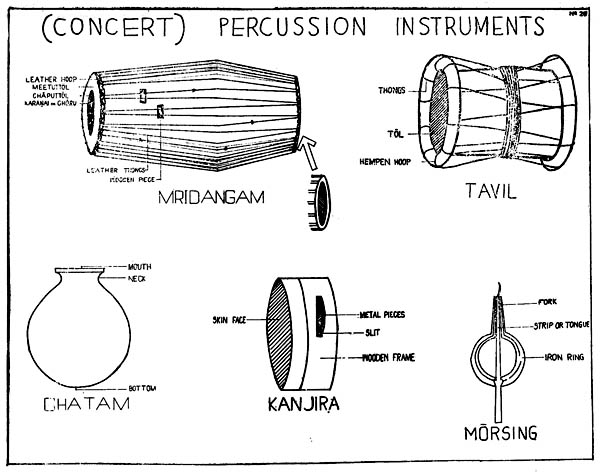
South India features a diverse range of percussion instruments, with the mridangam being the most prominent. It accompanies classical dance forms such as Bharatanatyam, Kuchipudi, and Mohini Attam, while other instruments like the chenda, edakka, and morsing are used depending on regional and stylistic needs.

Taal System and Evolution
The Carnatic system has evolved a highly sophisticated rhythmic framework compared to Hindustani music. Taal is maintained through hand gestures and finger counts, with five primary taals—Adi, Roopakam, Khandam, Misram, and Sankeernam—being most commonly used out of the traditional twenty-two.
The Modern Percussionist
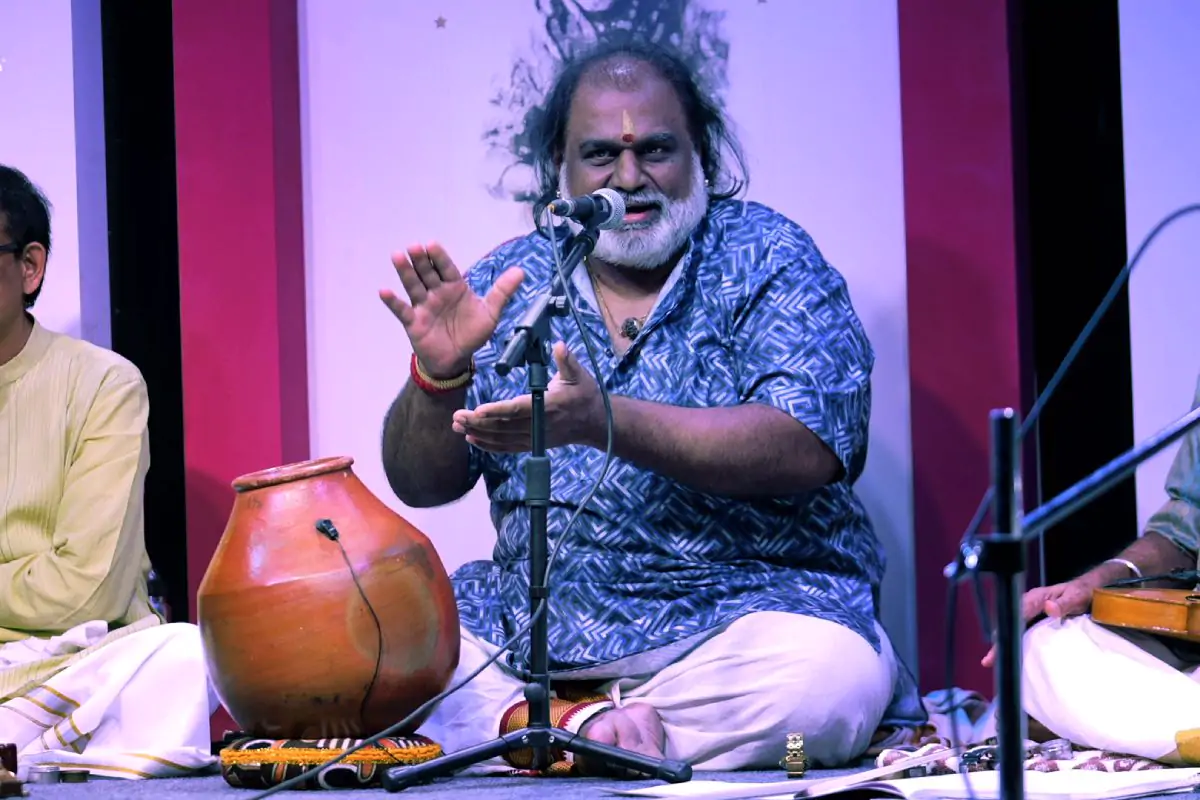
Over time, the role of the percussionist has evolved significantly. Once limited to accompaniment, mridangam artists today also perform solo concerts, showcasing rhythmic mastery and reinforcing the instrument’s central position in Indian classical music.
About the Mridangam
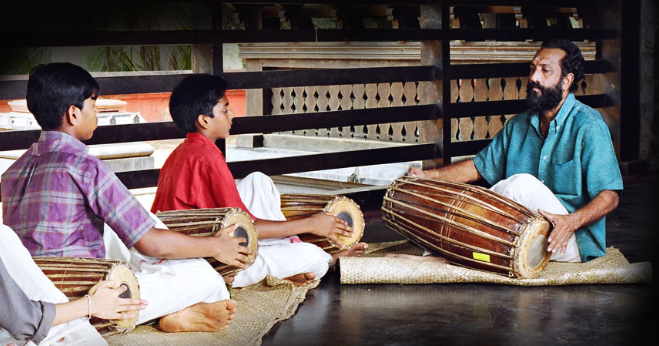
The mridangam is the classical double-sided drum of South India and is widely used as an accompaniment for vocal, instrumental, and dance performances. The word mridangam comes from the Sanskrit term “Mrid Ang”, meaning “clay body,” indicating that early versions of the instrument were made from clay. Today, it forms the foundation of Carnatic classical percussion.
Modern mridangams are carved from a single block of wood, most commonly jackwood or redwood. Jackwood is preferred because of its tightly packed fibres, fewer pores, and lower density, all of which improve sound transmission. In some cases, the core of coconut or palm trees is also used.
V = E / ρ
where V is the velocity of sound, E is the stiffness (modulus) of the material,
and ρ is its density.
Sound travels faster in materials that are stiff and light. Jackwood has a high
stiffness due to its tight fibre structure and a relatively low density, resulting
in a higher velocity of sound and better tonal quality.
The mridangam is a barrel-shaped, double-headed drum with the right head being smaller than the left. The heads are made of layered animal skin and are tensioned using leather straps running along the body. Small wooden cylinders placed between the straps and the shell are used to fine-tune the pitch.
The right head consists of three concentric layers of skin. The outer ring is known as the Meetu thol and the inner ring as the Chapu thol. At the center lies the permanent black spot called the Soru, made from rice paste, manganese, and iron filings. This enables harmonic overtones and gives the mridangam its unique tonal character.
The left head, known as the Toppi, is made of two layers of skin and is treated with a temporary paste of semolina and water to produce a deep bass sound. The mridangam uses a single resonating chamber, creating acoustic coupling between both heads. Straw placed between membrane layers increases damping and enhances tonal control.